Letter: To Charles Penrose from Mary Penrose, 1839
Mary Penrose is writing from Point Celeste sugar plantation in Plaquemines Parish Louisiana to her brother Charles B. Penrose in Carlisle. She is urging him to help.
The Cumberland County Historical Encyclopedia is an expanding publication on the history of the Cumberland County. Covering a wide range of topics and the entire Cumberland County geographic region, the Encyclopedia seeks to be an initial entry point to those interested in the County's history. Entries seek to provide a list of resources available as well as showcasing some of the Cumberland County Historical Society's own collections.
Mary Penrose is writing from Point Celeste sugar plantation in Plaquemines Parish Louisiana to her brother Charles B. Penrose in Carlisle. She is urging him to help.
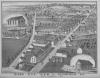
In 1812, tavernkeeper Michael Forner laid out lots on a piece of land on the road from Carlisle to Newville. He called the new town Plainfield. Plans were afoot for a Grand Turnpike from Harrisburg to Pittsburgh, and Forney thought it "would more than probably go through his new town."It did not. Often referred to as Smokey Town, the name Plainfield was officially adopted with the opening of the Post Office. The map of Plainfield in the 1872 Atlas of Cumberland County shows the locations of the shops, two churches, the school, the hotel as well as the houses. Plainfield grew, and by 1910, the village had approximately 200 residents.
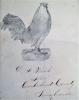
David A. Plank was born near Churchtown, Cumberland County on June 13, 1838, the son of Anna Maria and Jacob Plank, Sr.1 David spent his early years on his father’s farm and later worked in his wheel factory at Churchtown.
Frederick A. Harris and Reverend Joseph Martin carried on a correspondence of reminiscences about Carlisle in the 1850s and 60s. Their letters were published in the American Volunteer newspaper in the 1890s.
Carlisle tavernkeeper John Pollock was a man with many irons in the fire including providing Philadelphia newspapers to those in Carlisle and the hinterland.
Being the wife of a tavernkeeper meant that Elizabeth helped with the running of the tavern as well as taking care of her family. Washing, cleaning, cooking in a hot kitchen over a fire for hours as well as helping in the barroom was hard work.
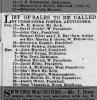
In the spring of 1900, Commodore Porter of Plainfield, had recently finished his twentieth sale of the season. A Chambersburg newspaper reported that he was “in his sixty-fourth year and is still hale and hearty and hopes to call many more sales.”1 It was not to be.
Cumberland County has played host to Prisoners of War at times during its history, most notably during the Revolutionary War, the Civil War, and during World War II.
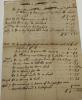
“John Proctor was a well-known figure in the industrial world of Carlisle in the early days; he made bits when they were made and filed and plated by hand, silver money being melted to get material for the plating.” Proctor was working in Carlisle as early as 1812 according to a bill he submitted to the County Commissioners for work done at the jail and the court house. The work included making locks, keys, and hinges for window shutters.
During the 39-year duration (1879-1918) of the Carlisle Indian Industrial School, students and faculty worked together to produce several news publications for the School’s students and those interested in its work.