Esther Lamberton and her twin brother Christopher James were born six years after their father James Lamberton killed John Duncan of Carlisle in a duel in June 1793.1 Esther wrote her will on September 23, 1878. She ordered that a suitable gravestone be erected over her grave and that of her brother James. She left her nephew Robert A. Lamberton her large mirror. She left her 8-day clock to her nephew Charles L. Lamberton. Her silver teaspoons were to be divided between her nephews Alfred J. and Henry W. Lamberton.
Her nieces Mary Paulding and Annie C. Lamberton were to divide the china cups and saucers between them. She bequeathed the following to her grandnieces. To Helen Noble her best half dozen knives and forks, to Janet Noble her black lace veil, to Mary daughter of James Lamberton her quilt “which I call Jobe’s trouble.” Robert Lamberton’s daughter Annie B. was to receive her mirror. She ordered that the residue of her estate was to be divided between her grandnieces.2
According to Esther’s obituary, she was born on April 1, 1799, “the daughter of General James Lamberton and a twin sister of Christopher J. Lamberton who still survives and resides at the U. S. Arsenal at Pikesville (Baltimore County, Maryland.)3 She had passed almost her whole lifetime in this community.”4 Esther died in Carlisle on March 27, 1880, and was buried in Carlisle’s Old Graveyard.
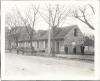
Her house on the north side of W. Pomfret Street, between Pitt and West Streets, was sold shortly after.5 In January 1882, carpenter Andrew Hecker was tearing down her house, and in the process he found several “old relics.” One was a quill pen in excellent condition, and the other was an old account book from the 1770s. The account book contained a list of consignments in a vessel to the port of Baltimore.6 Did the pen and account book have any connection to a member of the Lamberton family or had it been left by a previous owner of the house?