Dr. John C. Neff: Dentist and Gold Rush ‘49er
Shortly before 1840, John Cassilus Neff1 and his family settled in Carlisle where he opened his practice as a dentist.2 During the 1840s, Dr.
Shortly before 1840, John Cassilus Neff1 and his family settled in Carlisle where he opened his practice as a dentist.2 During the 1840s, Dr.
Margaretta, her husband, John Cassilus Neff1 and their children, settled in Carlisle in 1838. Dr. Neff set up a practice as a dentist, and his wife, Margaretta, opened a millinery shop, both at No. 7 Harper's Row. Mrs.
On Monday, April 10, 1865, news of the surrender of General Robert E. Lee and his Army of Northern Virginia reached Carlisle, Pennsylvania. In response to this event one of the town’s newspapers, the American Volunteer, exclaimed, “Thank God! [T]he fearful and bloody rebellion that has desolated our land for over four long years, costing, as it did, hundreds of thousands of lives, thousands of millions of treasure, is, so far as fighting is concerned, over.”1 Lee’s surrender signaled an end to the fighting between the United States and the Southern Confederacy.
Interview of Terry Nickey for the Elizabeth V. and George F. Gardner Digital Library Memory Bank. Nickey discusses his life growing up in Cumberland County including his families long connection with the County and how he came to join the Catholic Church. He also delves into the history of St. Patrick Church in Carlisle, PA.
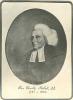
Charles Nisbet (21 January, 1736-18 January, 1804), was born near Haddington, Scotland, and died in Carlisle, Pennsylvania. Educated at the University of Edinburgh, he was a Presbyterian minister and formidable scholar, known to contemporaries as a walking library. From 1785 to 1804 he served as the first principal (president) of Dickinson College.
When the women of the Civic Club of Carlisle purchased a new Studebaker Street Sprinkler in May 1903 to keep the streets of Carlisle clean, the club was not only embarking on new territory but also continuing an already impressive, albeit short, civic track record.
In the Carlisle of 1946 with the war over, the US Army Medical Field Service School left the Barracks for Ft. Sam Houston in Texas, the Pennsylvania Palomino Exhibitors Association was incorporated, McCoy Brothers, Inc. construction service was established, and BSA Troop 173 was chartered at Carlisle Barracks. And boys played baseball all summer.
Interview of Wilson O'Donnell for the Elizabeth V. and George F. Gardner Digital Library Memory Bank. O'Donnell discusses his role as the first professional curator of the Cumberland County Historical Society including the exhibits he curated.
''All at once I was startled by the howling of members and rattling of ponderous chains ... he grasped me with Herculean strength and shook me violently, dragging me up and down the room ... the funniest appearance was their grotesque and ludicrous dresses, and all wore burlesque masks" a member of the Independent Order of Odd Fellows recalled of his initiation in 1832.
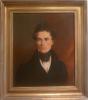
Born in Carlisle in 1810, this gifted artist trained in Philadelphia, traveled extensively, won awards for his paintings, and drank himself to an early death in San Francisco in 1859. In 1872, James Miller McKim wrote a series of reminiscences for the Carlisle Herald newspaper about the places and people of Carlisle in an earlier day. He wrote that “David Smith, a boot and shoemaker, had two sons…