Henry Glass: Hotel Keeper
American Volunteer, May 2, 1861. “DESTRUCTIVE FIRE. Glass’ Hotel in Ashes—Narrow Escape of the Inmates—Heavy Loss, etc.
American Volunteer, May 2, 1861. “DESTRUCTIVE FIRE. Glass’ Hotel in Ashes—Narrow Escape of the Inmates—Heavy Loss, etc.
Big Spring Creek is a five-mile-long tributary of Conodoguinet Creek in Cumberland County. It is formed by the fifth largest spring in Pennsylvania with a median flow of 18 million gallons a day. The headwaters are near U.S.
In Carlisle’s Old Graveyard at the corner of East South and South Bedford Streets is located an eight foot Celtic cross commemorating the burial place of Brigadier-General William Thompson.
The Shippensburg borough lives in two Pennsylvania counties, mostly in Cumberland but also in Franklin. In 1730, twelve Scots-Irish families traveled the Virginia Path Indian trail (now U.S.
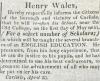
A former resident wrote reminiscences of his school days in Carlisle in the 1820s and of his teacher Henry Wales. He sent them to the editor of the Carlisle Herald for publication.
Intellectually, Benjamin Franklin was a very gifted person, with only a few years of academic schooling, he was a self-taught individual. Franklin was born in Boston, Massachusetts, one of ten children of a soap and candle maker.
Doubling Gap is the name given to the geographical formation in which Blue Mountain curves back on itself creating double gaps in the mountain range.

Interview of Annette Braught by Blair Williams on February 11, 2016. The interview focuses on Braught's grandparents, parents, and uncle and the time she spent with them growing up in Carlisle. She then discusses her own art work.
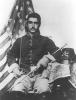
Charles Henry Masland, founder of C. H. Masland & Sons, was born on December 15, 1841, in Germantown, Philadelphia, Pennsylvania. Along with his father and three of his brothers, he served in the Union Army in the Civil War.
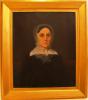
Williams came to Carlisle in 1841 and opened a studio in Beetem's Hotel. The October 27, 1841 edition of the Carlisle Weekly Herald extolled his talent for representing faces on ivory and canvas and urged people to visit his studio. Painting portraits was not Williams' only talent.