Caprivi Postmaster Killed by Lightning
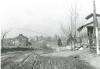
Caprivi is an unincorporated community in North Middleton Township about three miles from Carlisle on Waggoner’s Gap Road. The community was previously known as Grissinger’s after John J.
Caprivi is an unincorporated community in North Middleton Township about three miles from Carlisle on Waggoner’s Gap Road. The community was previously known as Grissinger’s after John J.
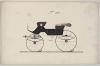
The years from 1850 to 1910 were the height of the carriage era in the United States.
The French Revolution was celebrated in Carlisle on July 14, 1792. The following description of the event appeared in the July 18 issue of The Carlisle Gazette and the Western Repository of Knowledge.

Although the Gulf Gas Station in this 1951 photo is the dominant feature of the picture, if you look to the right of the back of the station, you can see several cars parked by a restaurant. That restaurant, now called Pitt Street Station, is the latest eatery on that spot since the first one opened in 1929.
In 1932, New York’s Museum of Modern Art held an exhibit titled “American Folk Art of the Common Man in America 1750-1900.” One of the paintings in the exhibit was titled “
The healthy sulphur spring waters and the cooling breezes from the North Mountain made Carlisle Springs a favored summer vacation spot for families from Philadelphia and Baltimore. In 1852, Morris Owen and Anson P.
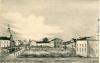
In 1844, a Mr. Richards of Reading, Berks County Pennsylvania, having heard from some residents of Reading that Carlisle was called the “Athens of Pennsylvania,” he decided to visit it and see for himself. When he returned to Reading his impressions of Carlisle were published in the April 17, 1844, edition of the “Reading Journal.” The “Carlisle Weekly Herald” published it for “the curiosity of its readers” in the April 24, 1844, edition of the newspaper.
In 1818, Jacob Baughman of Carlisle drew a map of Carlisle noting the locations of churches, graveyards, public buildings, still houses, tanneries, and the names by which each of the borough’s street corners were known.1 His map shows “Black Rock” on the north west corner of Main and W
Ice skating parks were very popular in the United States from the 1860s to the 1890s. They were not just places to skate, but places to socialize during the dark days of winter. In 1870, Mrs.
Fronting on Church Avenue, adjoining St. John’s Episcopal Church on the Square, the eight brick houses that make up Carlisle’s Irvine Row are the rare survivors of an intact nineteenth-century streetscape. They stand on Lot #171 in the original plan of Carlisle.