Harry Stickler and his Sister Kate of Boiling Springs
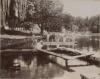
Harry Strickler was in possession of a relic from the battlefield at Gettysburg. It was a six-pound bombshell charged with powder and bullets.1 It nearly cost him his life.
Harry Strickler was in possession of a relic from the battlefield at Gettysburg. It was a six-pound bombshell charged with powder and bullets.1 It nearly cost him his life.
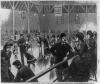
A roller skating craze swept the country in the 1880s. Opinions were divided on whether roller skating rinks provided the public with “healthful amusement” or were “pits of perdition” as some preachers claimed.1 Regardless, roller skating was so popular that rinks were built in Carlisle, Mechanicsburg, Mt. Holly and Shippensburg.
Interview of Ann Moser for the Elizabeth V. and George F. Gardner Digital Library. Moser discusses her life at the Second Presbyterian Church in Carlisle including growing up next to the Manse, the move to Garland Ave., and the history of the Church.
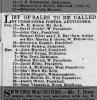
In the spring of 1900, Commodore Porter of Plainfield, had recently finished his twentieth sale of the season. A Chambersburg newspaper reported that he was “in his sixty-fourth year and is still hale and hearty and hopes to call many more sales.”1 It was not to be.
Interview of Shirley Heishman for the Elizabeth V. and George F. Gardner Digital Library. Heishman discusses her life growing up in Bloserville outside of Newville, Pennsylvania including her experiences working on her parents farm to meeting her husband Don Heishman and their many business ventures from hauling milk, water, and whey to building the Heishman Softball Complex.
Interview of Judge Sylvia Rambo for the Elizabeth V. and George F. Gardner Digital Library. Rambo discusses her life at the Second Presbyterian Church in Carlisle as well as her career as a lawyer and a Judge.
Interview of Frank Brandt for the Elizabeth V. and George F. Gardner Digital Library. Bradnt discusses his life at the Second Presbyterian Church in Carlisle as well as his work in the Crystal Industry including helping designing the crystal used in the camera Alan Shepard used on the moon.
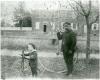
Velocipedes were all the rage in Paris, and by November 1868 they had made their appearance on the streets of New York and were causing a sensation.
For several decades during the second half of the 19th century, William Egolff and his sisters Elizabeth and Barbara operated a boarding house in Carlisle in the three-story brick building at No. 7-11 North Hanover street.
One-hundred and thirty-seven years after George Washington supposedly sat in a Sheraton chair in Carlisle, Pennsylvania, it was sold.