Letter: George Murray to Son Joseph A. Murray, 1832
Letter: Christmas Day 1832. To Joseph A. Murray in Pittsburgh from his Father George Murray, Carlisle “The Varioloid is rapidly declining in Carlisle… and I would wish you to get vaxinated [sic].”
Letter: Christmas Day 1832. To Joseph A. Murray in Pittsburgh from his Father George Murray, Carlisle “The Varioloid is rapidly declining in Carlisle… and I would wish you to get vaxinated [sic].”
Letter: William B. Murray to his brother Joseph A. Murray in Pittsburgh, 1835. William B. Murray (1808-1890) and Joseph A. Murray (1815-1889) were two of the five children of George Murray and his wife Mary Denny of Carlisle.
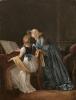
Children and those who wanted to play an instrument either learned at home from their parents, from relatives, or by instruction from private tutors or traveling music masters.
When a man sleepwalks and falls out of his hotel window on the second floor, that's odd. When two men sleepwalk and fall out of the windows of their rooms on the second floor of the same hotel, that's very odd. But when three men in three years sleepwalk and fall out of their windows on the second floor of the same hotel, that's a mystery.
Most of us are familiar with contemporary descriptions of the near-death experience: the bright light, the tunnel, and the feeling of being "out of the body." Those who have had the near death experience also describe being taken to the other side, only to be told that they had died before their time and that they must go back.
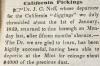
Shortly before 1840, John Cassilus Neff1 and his family settled in Carlisle where he opened his practice as a dentist.2 During the 1840s, Dr.
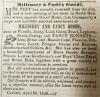
Margaretta, her husband, John Cassilus Neff1 and their children, settled in Carlisle in 1838. Dr. Neff set up a practice as a dentist, and his wife, Margaretta, opened a millinery shop, both at No. 7 Harper's Row. Mrs.
The Carlisle Weekly Herald reported in its January 5, 1859 edition that “On New Year’s Eve, the custom of “firing off the old year” was indulged in to the usual extent that everything that would make noise, from a Chinese firecracker to an old musket, was in requisition, and a continual
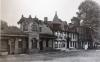
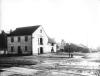
The Big Spring Hotel was situated near the Newville Depot on the Cumberland Valley Rail Road. It was enlarged and improved by its owners, the Ahl brothers, in 1860. By May 1860, a three-story brick addition to the back of the hotel was almost finished.1
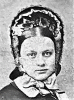
In 1860, women of almost all social classes purchased clothing from milliners and dressmakers: goods were made to order usually in a small shop with a female entrepreneur.